
Bail Bondsman vs. Attorney: Who You Need and When
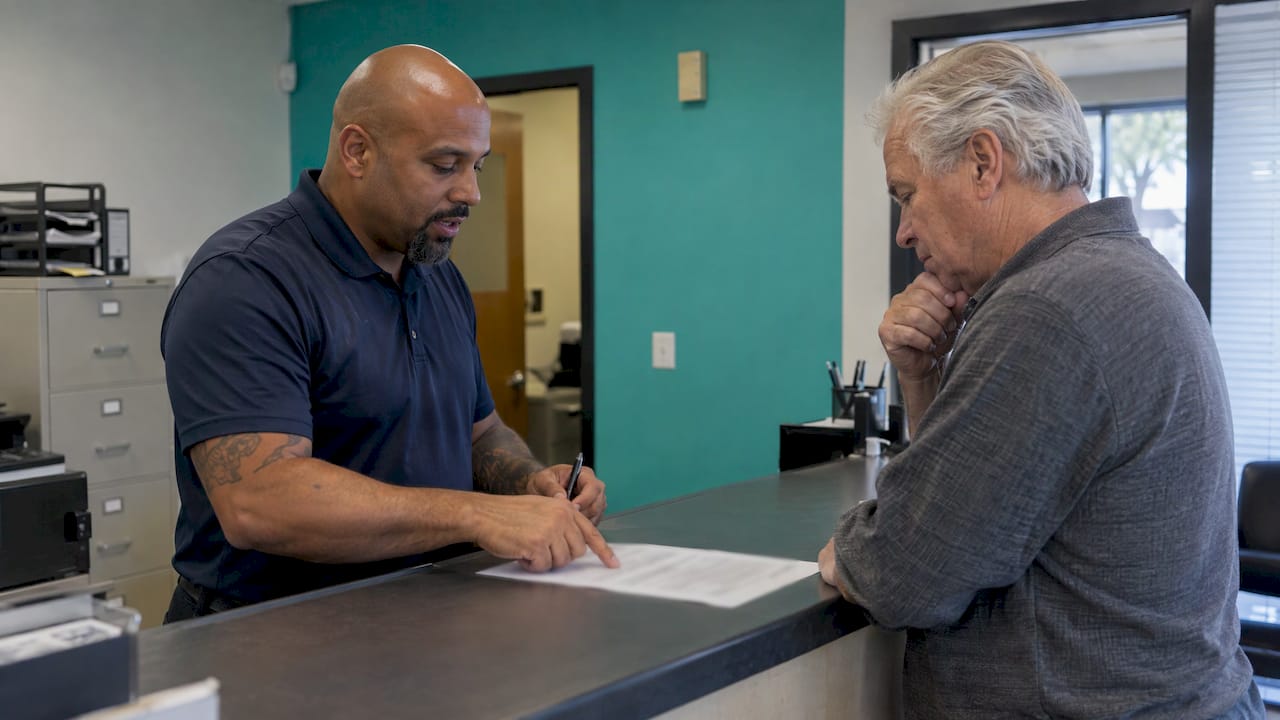
A bail bondsman and a criminal defense attorney do different jobs, and most families need both. The bondsman gets your loved one out of jail while the case is pending. The attorney defends the case itself. If someone you love was just arrested in Southern California, the bondsman is usually the first call because every hour in custody counts. At Armstrong Bail Bonds, you speak directly with a licensed agent 24/7, and release can often happen within 30 minutes of the bond being processed.
TL;DR
- A bondsman posts the bail bond so the defendant can leave jail. An attorney advises the defendant, argues in court and builds the defense.
- Paying an attorney does not pay bail, and hiring a bondsman does not give anyone legal representation.
- In California, the court sets the bond amount, not the bondsman. A typical bondsman fee is 10% of the bail, and the California Department of Insurance says it can be rebated lower.
- The two work in sequence: the bond brings the person home, and the attorney works on the case while they are home.
- Call a bondsman first when speed matters. Line up an attorney before the first court date.
Table of Contents
- What a bail bondsman actually does
- What a criminal defense attorney does
- Side by side: bondsman vs. attorney
- Does an attorney pay bail? Does a bondsman provide a lawyer?
- How they work together in a real case
- What each one costs
- When you can skip one, and when you cannot
- Getting your loved one out in Southern California
- FAQ
- Sources
What a bail bondsman actually does
When a court sets bail, the full amount can be tens of thousands of dollars. A bail bondsman closes that gap. According to Cornell Law School’s Legal Information Institute, a bondsman acts as a surety: they pay the court and promise the defendant will show up. In return, the bondsman typically charges a non-refundable fee of 10% of the bond.
The bondsman’s job is narrow and practical:
- Take the call from the defendant, the defendant’s attorney or an adult friend or family member. California law says bail agents may not solicit, so the contact has to come from your side, according to the California Department of Insurance (CDI) overview of the state’s bail system.
- Confirm the bail amount and the jail holding the person.
- Complete the paperwork, sign the agreement with the person financially responsible (the indemnitor, usually a family member) and collect the fee.
- Post the bond with the jail or court.
- Make sure the defendant makes every court date. If they miss one, the bondsman is on the hook for the full bail, which is why the bondsman cares so much about court reminders.
A bondsman does not give legal advice, argue the charge, negotiate with the prosecutor or ask a judge to lower bail. That is the attorney’s lane.
What a criminal defense attorney does
An attorney represents the accused. That starts at the first court appearance and continues through trial or plea. In practice, that means:
- Advising the defendant on what to say and what not to say.
- Reviewing the charges and the evidence.
- Appearing at arraignment, the first hearing where charges are read and bail can be addressed.
- Asking the judge to lower bail or release the person without bail, where the facts support it.
- Negotiating with the prosecutor and, if needed, taking the case to trial.
The right to a lawyer is built into the process. Under Federal Rule of Criminal Procedure 5(d), a judge at a felony initial appearance must tell the defendant about the right to retain counsel or ask for appointed counsel, and must give a reasonable chance to consult counsel before deciding on detention or release. California state court practice follows the same principle. If you are not sure when someone may speak with a lawyer after an arrest, this explanation of Miranda rights and consulting counsel covers the basics.
California also gives arrestees speed. Under Penal Code section 825, a person in custody must generally be brought before a judge within 48 hours of arrest, excluding Sundays and holidays, with some exceptions. That is why the first days matter for both the bond and the lawyer.
Side by side: bondsman vs. attorney
| Bail bondsman | Criminal defense attorney | |
|---|---|---|
| Main job | Posts the bond so the defendant can leave jail | Defends the case and protects legal rights |
| When you need them | As soon as bail is set and you cannot pay it in full | From the first hours after arrest through the end of the case |
| Who sets the amount | The court sets the bond amount; the bondsman does not | The attorney sets fees; the court sets bail |
| Typical cost | A percentage of the bail amount, commonly 10% | Hourly or flat fee, depending on the case |
| Gives legal advice | No | Yes |
| Can argue for lower bail | No | Yes, at a bail hearing |
| Gets someone out of jail | Yes, once the bond is posted | Only by winning release or lower bail from a judge |
Does an attorney pay bail? Does a bondsman provide a lawyer?
No on both counts, and this is the most common mix-up.
Paying a lawyer does not put money toward bail. Bail is a separate sum owed to the court, and your defense retainer is a separate payment for legal work. A lawyer can ask a judge to reduce bail or release the person on their own recognizance (a written promise to return to court, with no money posted). But if the judge sets a number, someone still has to post it, either in full with cash or through a bond.
In the other direction, a bond fee buys release, not representation. The bondsman’s responsibility is to the court and to the defendant’s appearance. Plan for legal counsel separately, even if the person is already home.
For a deeper look at how the two worlds meet, see our article on why early legal representation matters when bail and criminal defense overlap.
How they work together in a real case
Here is the usual sequence for a family in Los Angeles or San Diego:
- Arrest and booking. The person is taken to a county jail. Bail is often set from the county’s bail schedule, a list of standard amounts for each offense. The CDI overview notes that an arrestee on a bondable offense has the right to post bail at the scheduled amount.
- The bond. A family member calls a bondsman, signs the agreement and pays the fee. The bondsman posts the bond, and the jail processes the release. Processing time depends on the jail’s workload.
- The attorney. While the defendant is home, the family hires or consults a defense attorney, who prepares for arraignment and every hearing after it.
- Court dates. The defendant attends each one. When the case ends, the bond is exonerated, meaning the bondsman’s obligation to the court is over.
Sometimes an attorney first asks the court to reduce bail at a hearing. That can lower the bond amount and therefore the fee. But the hearing may not happen for a day or more, and the person stays in custody until then. Many families post the bond immediately and let the attorney work on the case from home. How long a bond hearing takes to get depends on the court’s calendar and the weekend and holiday schedule, so ask your attorney about the court’s timing.
What each one costs
Bail bond fees in California are regulated. The CDI overview says bail agents usually charge 10% of the bail amount, for example $2,500 on a $25,000 bail, and that under Proposition 103 the fee can be rebated, lowering the effective rate anywhere from 8% down to 2%. For high bail amounts, an agent may ask for a lien on real property as collateral. If the defendant is surrendered, the fee can be refundable minus administrative costs.
Our published bail bond premium is 10%. We also offer 2% bail bonds and 1% bail bonds, and we offer flexible payment plans so families can spread the cost. If collateral worries you, see our page on bail bonds with no collateral.
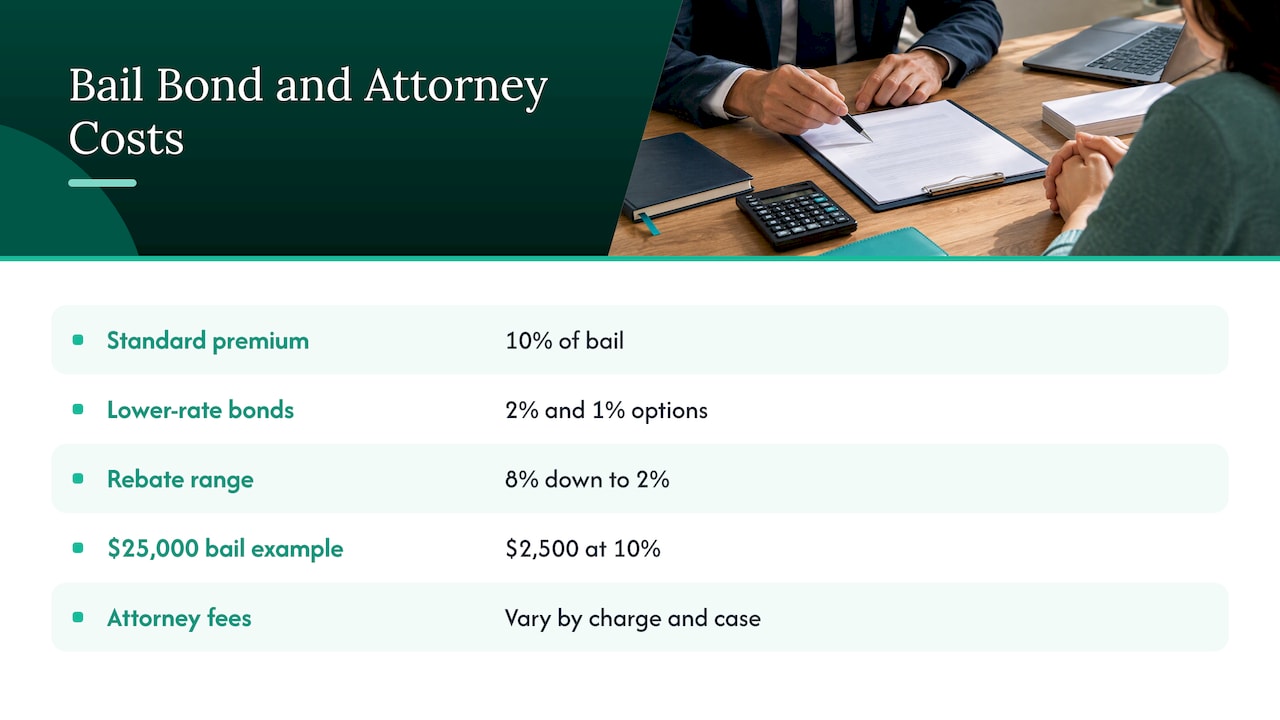
Attorney fees vary widely with the charge and how far the case goes. Ask any attorney you consult for a written fee agreement that explains what is included.
Worked example. Bail is set at $50,000. At the standard 10% fee, the bond costs $5,000, which you do not get back, but you are not tying up $50,000. If a payment plan is available, that $5,000 can be spread out. The attorney’s retainer is a separate bill.
When you can skip one, and when you cannot
- You always need the lawyer question answered. Even for a misdemeanor, the legal outcome (a record, fines, probation) is decided in court. If the person cannot afford an attorney, the court can appoint one.
- You need a bondsman only if bail is set and you cannot pay it in full. If the judge releases the person without bail, there is no bond to post. If you can afford the full cash bail, posting your own bail is possible, though many families still use a bond to keep their cash available for legal fees. We explain this in 3 reasons to get a bond even if you can pay your own bail.
- Some charges are not bondable. See what crimes are not eligible for a bond. In those cases, the attorney’s role at the bail hearing becomes even more important.
Rules differ by state. For instance, according to Cornell’s Wex entry, Illinois, Kentucky, Oregon and Wisconsin have banned commercial bail bonding, and Texas voters approved a constitutional amendment in November 2025 that allows bail to be denied for specified serious offenses. This article describes California practice, where bail bond agents are licensed and regulated by the California Department of Insurance.
What we tell families: do both, and start with the call that brings them home
Four generations of our family have worked in California bail since 1926, and the question we hear most is “Do I need a bondsman or a lawyer?” Our answer is that you are not choosing. The two jobs do not overlap.
A night in jail is a hard thing for the person inside and for the family waiting. A bond is the fastest legal way to end it. When you call us, you reach a licensed agent, not a call center, and we explain the cost, the timing and what the paperwork means before you sign anything.
Then call an attorney, ideally before the first court date. The bond gives your loved one the chance to sit down with counsel, gather documents and prepare, from home and not from a cell.
Jake
Getting your loved one out in Southern California
If you need a bond in Los Angeles or San Diego, we work around the clock. You can start online or by phone, our staff speak English and Spanish, and our free inmate search helps you confirm where the person is held and what bail is set at. We handle felony and misdemeanor charges, including DUI, drug, domestic violence, assault and burglary charges. Start with our Los Angeles and San Diego bail bond services or go straight to online bail bonds.
Have this ready when you call: the full name and date of birth of the person arrested, the jail where they are held, and the booking number if you have it. We will take it from there. Calling at night or on a weekend is fine; see our page on whether bail bonds are open on weekends.
FAQ
Can a lawyer get someone out of jail without a bondsman?
Sometimes. A lawyer can ask a judge to lower bail or release the person without bail, and a judge may agree depending on the charge and the person’s record. If the judge sets a dollar amount, someone still has to post it, and a bond is the way most families do that without paying the full sum.
Is a bail bondsman the same as a bail bond agent?
Yes. In California, both terms refer to the same licensed professional. The California Department of Insurance licenses bail agents and regulates their activities.
Does the bondsman’s fee go toward my lawyer or the court?
Neither. The fee is what you pay the bondsman for posting the bond and taking on the risk that the defendant will not appear. Your attorney’s fee is a separate agreement, and bail goes to the court only when posted.
Who decides how much bail is?
The court. Counties publish bail schedules, and a judge can raise or lower the amount at a hearing. Per the CDI overview, the bondsman does not set the bond amount but negotiates the cost of the bond and completes the surety process.
Sources
- Cornell Law School LII: Bondsman (Wex)
- California Department of Insurance: An Exploration of California’s Bail System (2017)
- U.S. Courts: Federal Rules of Criminal Procedure
- Penal Code 825: arraignment within 48 hours
- Texas Indigent Defense Commission: Texas Fair Defense Laws 2025-2027