
30 Minutes to Several Hours: Los Angeles Jail Release for Families
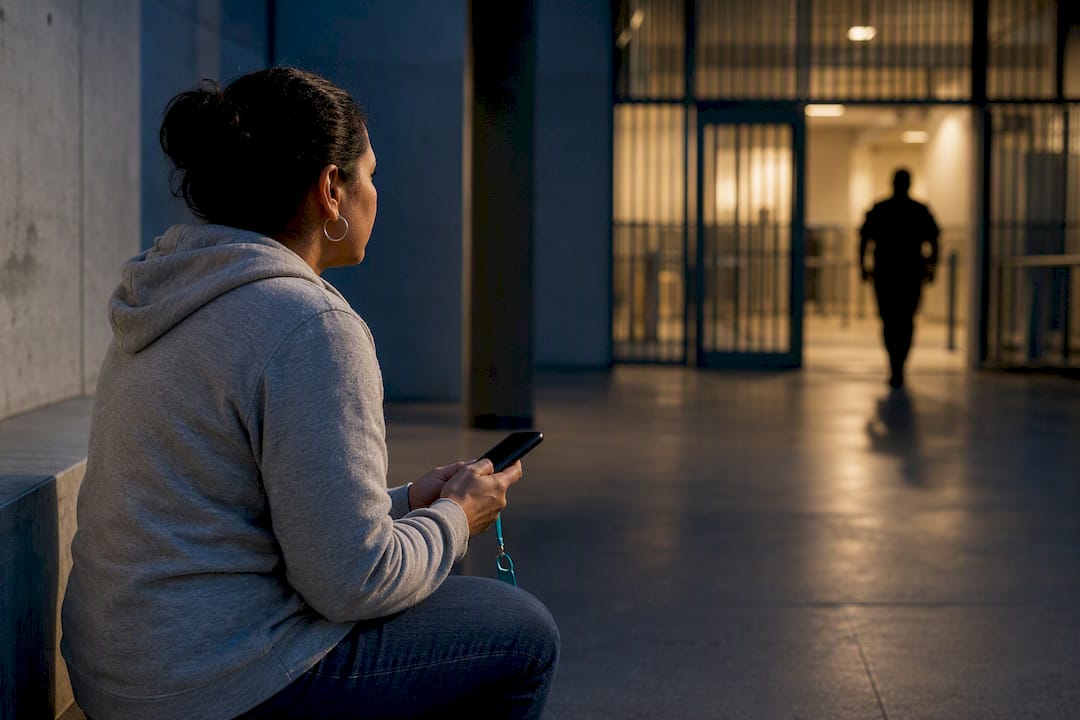
Call a licensed bail agent right now and give them the defendant’s full legal name, date of birth, and the jail where they’re held. The agent verifies the booking, prepares the bond paperwork, and takes payment or sets up financing on the spot. Once the bond is posted, the jail takes over and processes the actual release, which can move fast or drag out depending on how busy the facility is that day.
TL;DR:
- Providing the defendant’s full legal name, date of birth, and jail facility upfront can prevent delays caused by name misspellings or incorrect booking details.
- Payment must be arranged and the bond filed with the jail quickly, but actual release depends on the jail’s workload, staffing, and anyholds or warrants.
- Cosigners are legally responsible for ensuring the defendant attends all court dates, and forfeiture can result in liability for the full bond amount.
- Receiving the correct documents, like court notices and property receipts, is essential after release, especially if conditions or restrictions are attached.
- Posting a bond does not guarantee immediate release if there are holds from other jurisdictions or immigration detainers that must clear first.
Table of Contents
- Steps To Take In The Los Angeles Jail Release Process
- What Documents Do You Need To Post Bail?
- Cosigner Responsibilities: What You’re Actually Agreeing To
- How Long Does Jail Release Take After Bail Is Posted?
- Getting Released From an LA County Jail Without a Bail Agent
- Own Recognizance, Citations, and Other Release Types
- What Happens Right After Someone Is Released From Jail
- LA Jail Release Office Contact Information
- How To Find an Inmate and Confirm They Can Be Released
- Publisher Perspective: Why Local Experience Still Matters
- Contact Armstrong Bail Bonds for Fast Bail Help
- Where To Verify California Bail Bond Rules
- Sources
- FAQ
Steps To Take In The Los Angeles Jail Release Process
The Los Angeles jail release process runs on a chain of small tasks, and skipping or rushing any one of them is what actually causes delays, not the paperwork itself. Here’s the order that get someone out fastest.
- Make the call and give exact details. Tell the agent the defendant’s full legal name as it appears on their ID, date of birth, and which facility booked them (LA County jails span multiple stations, so this matters).
- The agent locates the booking and confirms the bail amount. Agents check the county’s bail schedule and the arrest record to see whether the charge is even bailable or if a judge has to set bail first.
- You sign the bond agreement. The cosigner, sometimes called the indemnitor, signs alongside the agent. This is the legal document that makes the cosigner responsible for the bond.
- Payment gets arranged. Most agents take cards, cash, or offer financing plans, and the premium is usually due before the bond is filed.
- The agent files the bond with the jail. This is the moment the clock actually starts on the jail’s side of the release process.
- You get a status update. A licensed bail agent worth using will tell you roughly when to expect a call or text once the defendant clears processing.
Pro Tip: Have the defendant’s exact legal name spelled out before you dial. Nicknames or partial names are one of the most common reasons agents have to call the jail back a second time, which adds real minutes to a process that’s already out of your hands once it hits the jail’s queue.
What Documents Do You Need To Post Bail?
Agents move faster when you show up with the right information already in hand, and most delays trace back to one missing detail rather than a complicated case.
Here’s what to have ready before you call:
- Defendant’s exact legal name, date of birth, and the specific facility holding them
- Booking number, if you have it (agents can often start without one)
- Cosigner’s government ID and proof of current address
- Cosigner’s employment or income information, plus a working phone number and email
- Payment method decided in advance: card, cash, or a request for a financing plan
- Any details about outstanding warrants, holds, or prior charges that might affect release
A practical bail bond checklist built from real agent experience makes the same point: families who show up with a partial name, a nickname, or a spelling variation almost always add time to their own case. If the defendant goes by “Tony” but their license says “Anthony,” say both. If you don’t have a booking number, say so upfront rather than guessing at one, because a wrong number sends the agent searching the wrong record entirely.
One detail agents flag constantly: collateral isn’t always required. Many bonds move forward on premium payment alone, and collateral only enters the picture for larger bond amounts or when the agent’s underwriting calls for it.
Cosigner Responsibilities: What You’re Actually Agreeing To
Signing as a cosigner means you’re personally guaranteeing the defendant shows up to every court date, and that guarantee carries real financial weight, not just a signature on a form.
If the defendant misses court, the bond can be forfeited, and the cosigner can become liable for the full bond amount, not just the premium already paid. The premium, usually a percentage of the total bail, is the fee for the service; the bond total is what the surety company is on the hook for with the court, and by extension, what you’re on the hook for if things go wrong.
California law gives cosigners real protection on the billing side. Under California Penal Code §1276.1, a bail licensee cannot charge more than one premium for the life of the bail agreement, and renewal premiums are prohibited outright. Agents can still bill separately for itemized, reasonable case expenses, like long distance calls or third party guard fees, but those charges have to be disclosed and specific, not folded into a vague recurring fee.
Protect yourself with a few concrete steps:
- Ask for an itemized breakdown of every charge before you sign anything.
- Keep copies of the signed agreement and every receipt.
- Get a direct phone number for the agent handling the case, not just a general office line.
- If the defendant misses a court date, contact the agent immediately rather than waiting to see what happens.
Pro Tip: Read the bond agreement before you sign, not after. A five-minute conversation about what happens on forfeiture is worth more than any reassurance an agent gives you verbally.
How Long Does Jail Release Take After Bail Is Posted?
Posting the bond is the easy part. What happens next depends almost entirely on the jail, not the agent.
Release timing hinges on a handful of factors: whether booking is fully complete, how backed up the facility is, whether a shift change is happening, and whether any holds or warrants are attached to the person’s record. A Ventura area bail bond guide puts it plainly: a posted bond can still sit in a release queue for a while, and timing varies widely by facility and circumstance.
- Bond gets filed with the jail, usually within minutes of signing and payment.
- Jail staff verify the paperwork against the booking record.
- Release processing begins, which can run anywhere from around 30 minutes to several hours depending on the day.
- The defendant is released once paperwork clears and any pending checks come back clean.
Special holds change everything. If there’s an immigration detainer or a hold from another agency, posting a California bond may not trigger release at all until that separate hold clears. Ask the agent to confirm releasability before anyone drives to the jail expecting a quick pickup.
While you wait: stay reachable by phone, confirm exactly where pickup happens (some facilities release from a different door than intake), and keep your ID on you in case staff need to verify who’s collecting the defendant.
Getting Released From an LA County Jail Without a Bail Agent
Not every release runs through a bail agent, and it helps to understand what the process looks like when someone qualifies for release through the jail’s own procedures instead.
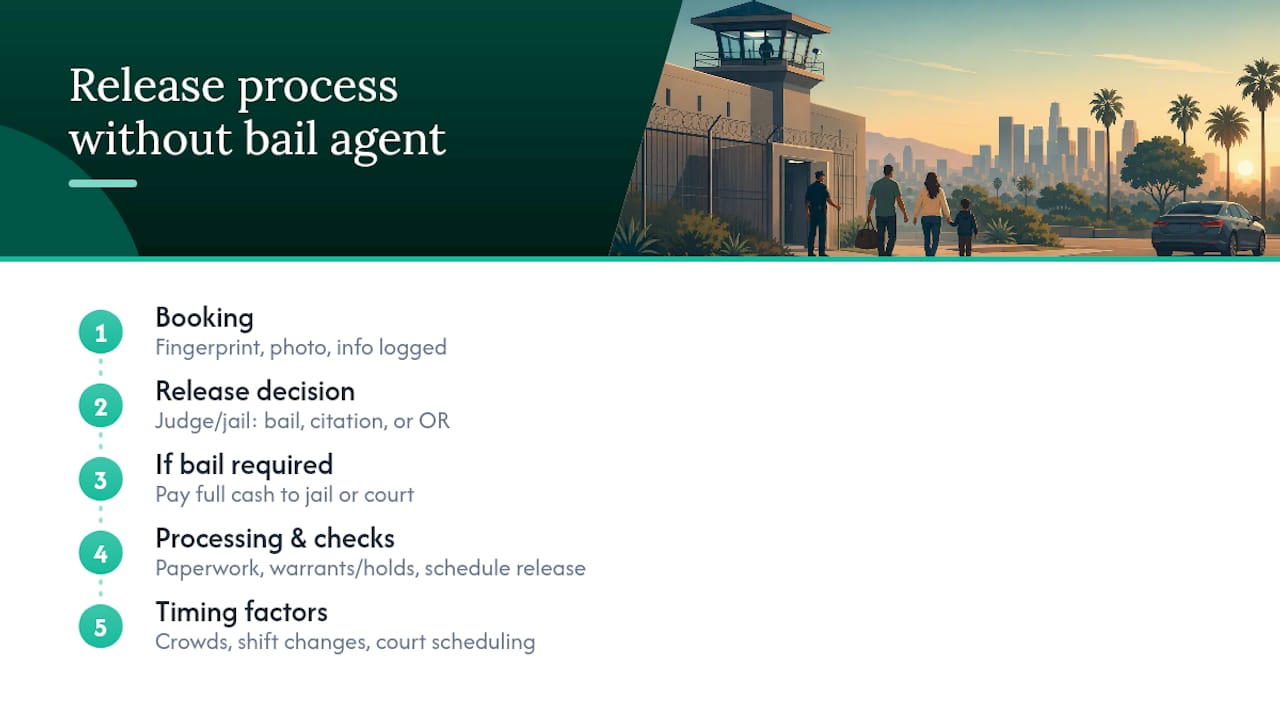
After arrest, the person is booked: fingerprinted, photographed, and their information logged against the county’s bail schedule. From there, jail staff or a judge determines whether bail applies, whether the charge qualifies for a citation release, or whether the person can be released on their own recognizance. If bail is required and no bond gets posted, the full cash amount has to be paid directly to the jail or court, which for most felony and many misdemeanor charges is a sum most families don’t have sitting in a bank account.
Once a release decision is made, the jail processes paperwork, checks for outstanding warrants or holds from other counties or agencies, and schedules the person for release from the facility’s booking area. This can take hours depending on how many people are moving through the system that day. Shift changes, particularly around evenings and weekends, tend to slow everything down.
The self-pay and no-bond paths exist, but they demand either the full bail amount in cash or a wait that depends entirely on court scheduling and jail staffing. That’s the tradeoff families are actually weighing when they decide whether to call an agent.
Own Recognizance, Citations, and Other Release Types
Bail isn’t the only door out of jail, and knowing which one applies to a specific case saves families from posting a bond they didn’t need.
Own recognizance (OR) release lets a defendant go free on a promise to appear in court, no money required. Judges typically grant this for lower level charges, when the person has strong community ties, a clean or minor record, and no history of missing court dates.
Citation release applies mostly to minor misdemeanors. Instead of a full booking and jail stay, the person is given a citation with a court date and released, often within an hour or two of arrest, sometimes without ever being fully booked into the jail system.
Cite and release at the scene is a variation officers use for very low level offenses, skipping the jail booking process entirely.
Bail bonds fill the gap for everything more serious than these categories: felonies, higher-level misdemeanors, and any charge where a judge sets a specific bail amount based on the county schedule. The deciding factors are usually the severity of the charge, the person’s criminal history, flight risk, and ties to the community. None of these categories are guaranteed, and a judge can deny OR release even for a minor charge if the person has missed court before.
What Happens Right After Someone Is Released From Jail
Release isn’t the end of the paperwork trail. The person walks out with documents and conditions that matter for everything that comes next.
They typically receive a court date notice listing when and where they need to appear next, along with a property receipt for anything confiscated during booking, like personal belongings, cash, or a phone. If the release came through a bail bond, the defendant and cosigner both get copies of the bond agreement showing the terms they’ve committed to.
Conditions can come attached to release, especially for domestic violence, DUI, or certain drug charges. These might include no contact orders, travel restrictions, check-ins with a pretrial services officer, or restrictions on firearm possession. Violating any of these conditions can result in the bond being revoked and the person taken back into custody, separate from what happens if they simply miss a court date.
It’s worth confirming with the bail agent exactly what conditions apply before leaving the jail parking lot, because conditions aren’t always explained clearly during the release process itself, and the person walking out is often too relieved to ask the right questions.
LA Jail Release Office Contact Information
Each Los Angeles County jail facility handles release logistics a little differently, and hours can shift depending on staffing and current booking volume. Rather than relying on a single county-wide number, families generally get the most accurate information by calling the specific facility holding the defendant directly, since release desks operate independently at each location.
Most LA County jail facilities run booking and release operations around the clock, but visitor services and in-person inquiries often have narrower windows, sometimes limited to specific hours in the morning and evening. If you’re trying to confirm release status or ask about pickup logistics, a licensed bail agent already working the case usually gets a faster answer than a family member calling the jail’s general line, simply because agents have direct experience navigating each facility’s specific procedures.
How To Find an Inmate and Confirm They Can Be Released
Before you plan anything, confirm two things: where the person is actually being held, and whether they qualify for bail or another release type.
Los Angeles County maintains an inmate locator system tied to booking records, searchable by name and date of birth. A bail agent can often run this search directly as part of the intake call, which saves a family from digging through an unfamiliar county system while stressed and short on time.
Eligibility depends on the charge, any prior record, and whether other agencies have placed a hold. A charge that looks straightforward on the surface can carry a hold from another county or an immigration detainer that isn’t visible in a basic inmate search. That’s why confirming releasability with an agent before assuming a bond will get someone out the same day is worth the extra five minute phone call.
Publisher Perspective: Why Local Experience Still Matters
Most families think posting a bond is the finish line. It’s not. It’s the starting gun for a jail process that runs on its own schedule, and the biggest variable isn’t the bond, it’s whether the agent handling it knows how a specific facility actually moves people through release.
Armstrong Bail Bonds has worked Southern California jails since 1926, and that kind of tenure builds something no checklist can replicate: knowing which facility runs slow on a Friday night, which desk to call, and how to avoid the mismatched-name mistake that stalls half the calls agents get. Their online intake and flexible payment options exist because families rarely have time to sit in an office. Whoever you call, ask for their California license number and confirm it before you sign anything.
— Jake
Contact Armstrong Bail Bonds for Fast Bail Help
Armstrong Bail Bonds gets defendants moving through the release process faster than families managing it alone, because the intake, paperwork, and payment steps happen in one call instead of scattered across a jail, a court clerk, and a bank. That’s the real advantage: one licensed team handling verification, bond filing, and payment logistics at the same time, with agents available 24/7 rather than during office hours.
Here’s what happens when you call:
- Quick intake over the phone, including a search to confirm the defendant’s exact location and bail status
- A clear rundown of documents needed from you and the cosigner before anything is signed
- The bond filed with the jail as soon as payment or financing is arranged
Armstrong offers flexible options for different situations, including 2% bail bonds, 1% bail bonds for qualifying cases, and no collateral bail bonds for families worried about pledging property. Agents are licensed, fees are disclosed upfront, and bilingual support is available for English and Spanish-speaking families. Call now or start an online bail bond application to get the process moving while you’re still gathering documents.
Where To Verify California Bail Bond Rules
For regulatory background on how bail bonds work and what agents can and can’t charge, check the California Department of Insurance’s bail bond guidance and the premium rules under Penal Code §1276.1. For facility-specific procedures, contact the Los Angeles County jail holding the defendant directly or check the county’s bail schedule.
Sources
FAQ
How Long Does the LA Jail Release Process Take?
Once a bond is posted, actual release from the jail can take anywhere from about 30 minutes to several hours, depending on facility workload and shift timing. Booking completion, staffing, and any outstanding holds all affect how long release processing runs on the jail’s side.
Who Can Cosign a Bail Bond in California?
Most adults with valid ID, a steady income or employment history, and a permanent address can cosign, though agents evaluate each case individually. The cosigner takes on legal responsibility for the full bond amount if the defendant fails to appear in court.
Can You Start the Bail Process Without a Booking Number?
Yes. A licensed agent can typically begin work with the defendant’s full legal name, date of birth, and jail facility, then locate the booking number during the process. Having it ready speeds things up, but its absence shouldn’t stop you from calling.
What Happens If There’s an Immigration Hold?
Posting a California bail bond does not clear an immigration detainer or a hold from another agency or jurisdiction. Ask the agent to confirm the defendant’s full releasability before assuming a posted bond guarantees release that day.
How Much Does a Bail Bond Cost in Los Angeles?
The premium is a set percentage of the total bail amount, and current rates and payment options are listed on the Armstrong Bail Bonds site. California law caps agents to charging that premium once for the life of the agreement, with no renewal premiums allowed.